









Music Career Finder

Start Here:

1. 1. Are you a Musician/Performer or are you just looking for a career in the Music Business? *This question is required.
2. 2. What are you most interested in? Select as many as you like. *This question is required.

Taking the first step toward being able to play an instrument can be a thrilling adventure.

With so many choices available, it’s essential to find an instrument that’s easy to learn and fun to play, especially for beginners. One of the toughest parts of learning to play an instrument is sticking with it, and the harder the instrument, the more difficult it is to keep going with lessons.

In this article, we’ll explore a selection of instruments known for their beginner-friendly nature. From the harmonica’s soulful tunes to the rhythmic tambourine, we’ll discover what makes each of these instruments special, how they bring joy through music, and why they’re perfect for those starting their musical journey.

So, if you’re eager to begin your musical exploration, join us as we dive into the world of accessible and enjoyable instruments. Oh, and once you’ve mastered one of the instruments mentioned below, you’ll be in a much better place to try your hand (or mouth) at something a little harder.

The Different Types Of Instruments

The vast world of musical instruments can be conveniently categorized into six major families, each with its distinct characteristics and roles in the rich tapestry of music. These groupings are bowed strings, woodwind, brass, percussion, keyboard, and the guitar family. While these categories encompass a wide range of instruments, they provide a fundamental framework for understanding the diversity of musical expression, and they make it easy to mentally organize all the many, many, many different types of instruments out there.

Bowed strings, including instruments like the violin and cello, produce beautiful and emotive sounds through the act of drawing a bow across their strings.

Woodwind instruments, such as the flute and clarinet, utilize the flow of air to create haunting melodies and harmonious tunes, often lending a distinctive voice to orchestral compositions.

Brass instruments, exemplified by the trumpet and trombone, offer bold and majestic tones that can cut through the musical landscape with power and grandeur.

The world of percussion, on the other hand, spans from simple instruments like the triangle and maraca to complex drum sets, providing rhythmic foundations and exciting textures to countless musical genres.

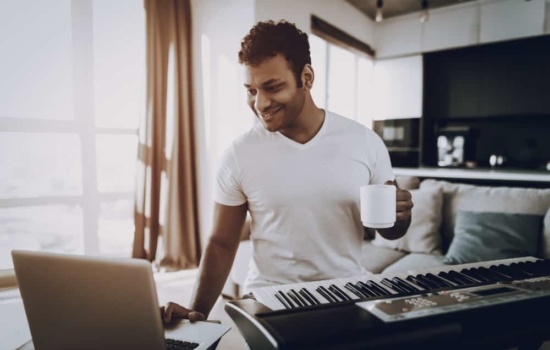
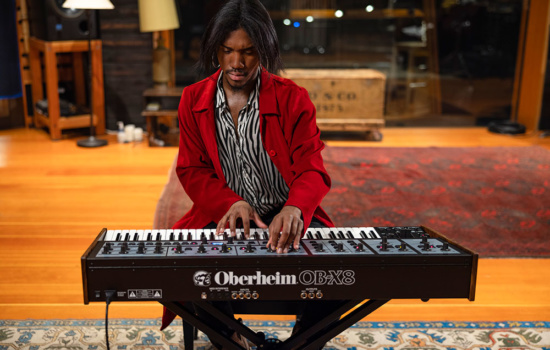
Keyboards, represented by the piano and organ (and of course the keyboard), offer a symphony at the fingertips, allowing musicians to explore the full spectrum of pitch and dynamics with the stroke of a key.

Finally, the guitar family, comprising both acoustic and electric guitars, as well as bass guitars, and other variants, invites both soloists and bands to craft intricate melodies and driving rhythms, making it a cornerstone of popular music.

These six families collectively shape the core of musical ensembles and compositions, with the first four forming the foundation of the symphony orchestra, a testament to the enduring power of these instruments to captivate the hearts and minds of audiences worldwide.

What is the number one hardest instrument to learn?

Hugh McIntyre

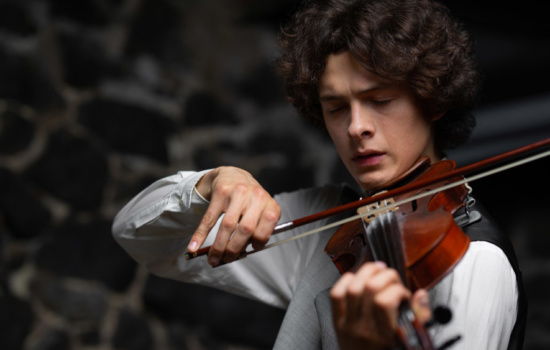
The violin is often regarded as one of the most challenging instruments to learn due to a combination of factors that make it exceptionally demanding for beginners. First and foremost, mastering the violin requires an acute sense of pitch and intonation, as there are no frets or keys to guide the player’s fingers to the correct notes. This means that beginners must develop a finely-tuned ear and muscle memory to hit the right pitches consistently.

Additionally, the violin demands intricate bowing techniques and precise finger placement, both of which necessitate countless hours of practice to achieve proficiency. The instrument’s smaller size and delicate strings make it highly susceptible to producing squeaks and screeches, adding to the initial frustration many novices encounter.


Bongos

Bongos are a pair of small, hand-played drums that are relatively easy for beginners to learn. Unlike larger drum kits, which can be daunting for newcomers, bongos consist of just two drums, typically of different sizes, that are played with the hands and fingers.

This simplicity in setup and technique allows beginners to quickly start creating rhythmic patterns and beats, making it a rewarding instrument for those new to percussion. Bongos are versatile and can be used in various musical styles, including Latin, jazz, and world music, offering beginners the opportunity to explore diverse genres.

Learning to play the bongos can be incredibly fun due to the tactile nature of hand drumming. The instrument allows for expressive playing and improvisation, making it engaging for musicians of all levels. Whether you’re playing in a group or as a soloist, the rhythmic possibilities of the bongos are vast.

Additionally, the compact size and portability of bongos make them a convenient choice for musicians on the go. They can easily become a social instrument, encouraging jam sessions and musical collaborations.

Hey, what do you think about trying our new Music Career HelperMusic Career Helper really quick? It’s totally free and could help get your career moving fast! Give it a try. It’s totally free and you have nothing to lose.

Glockenspiel

The glockenspiel is a percussion instrument that is often favored by beginners due to its simplicity and straightforward playing technique. It consists of a set of metal bars arranged in a similar fashion to a piano keyboard, and players use mallets to strike the bars and produce musical notes.

The glockenspiel’s design and layout make it easy for beginners to understand musical concepts such as pitch and melody. Since it is tuned to a specific scale, beginners can quickly learn to play simple tunes and melodies, making it an enjoyable and rewarding instrument for those who are new to music.

Playing the glockenspiel can be fun, as it produces bright and cheerful tones that are pleasing to the ear. It is often used in various musical genres, including classical, pop, and children’s music. Its versatility allows beginners to explore different styles and experiment with melodies and harmonies.

The glockenspiel’s compact size and portability also make it a convenient instrument for practice and performance. While it may not be as widely recognized as some other instruments, the glockenspiel offers beginners an accessible and enjoyable entry into the world of making music.

Harmonica

The harmonica is often hailed as one of the easiest instruments to learn for beginners, and for good reason. Its compact size and straightforward design make it accessible to musicians of all ages.

Learning to play the harmonica primarily involves mastering a simple breath and mouth technique to produce different notes. This simplicity is a major advantage for beginners, as they can quickly produce recognizable melodies and experiment with various sounds without getting bogged down by complex fingerings or chords.

The harmonica’s portability also makes it a convenient instrument to carry around and practice anywhere, adding to its appeal.

Moreover, the harmonica is undeniably fun to play. Its bluesy, soulful tones can be used to convey a wide range of emotions, and it’s an instrument that harmonizes well with various music genres. Whether you’re playing folk, blues, or even rock music, the harmonica adds a unique and enjoyable dimension to your sound.

Maraca

The maraca is a percussion instrument that’s incredibly easy to pick up, making it an excellent choice for beginners, especially those with little to no musical experience. It consists of a hollow container filled with seeds, beans, or beads, and all you need to do is shake it to produce rhythmic sounds. This simplicity makes it an ideal instrument for young children and adults alike, as there are no complex techniques to learn or fingerings to master. It’s all about rhythm and having fun.

Maracas are often used in Latin American music, adding a distinctive percussive element to genres like salsa, cumbia, and merengue. They’re also popular in various other music styles, including pop and rock.

Beyond its musical use, the maraca can be a fantastic tool for developing a sense of rhythm and coordination. Playing the maraca can be a communal and enjoyable experience, as it’s easy for multiple people to join in, creating a lively and energetic atmosphere.

Recorder

The recorder is another excellent choice for beginners, especially children. Its simple design, with just seven finger holes, allows beginners to quickly grasp the basics of reading music and producing melodies.

Unlike many other wind instruments, the recorder doesn’t require complex techniques, making it easier for beginners to produce clear notes and achieve early success. It’s a great foundation for learning other woodwind instruments like the flute or clarinet, as it teaches the fundamentals of breath control and finger coordination.

One of the recorder’s key advantages is its utility in educational settings. It’s often used in music education programs to introduce children to the world of music, helping them develop essential musical skills such as reading sheet music, understanding rhythm, and playing in an ensemble. While some may view it as a “beginner’s instrument,” the recorder’s historical significance and its presence in classical, folk, and early music genres make it a valuable instrument to learn.

Tambourine

The tambourine is a percussion instrument known for its simplicity and infectious rhythm. It’s a great instrument for beginners, as it doesn’t require extensive technique or complex musical theory–or really any of that, to be honest.

Players hold the tambourine in one hand and use the other hand to strike or shake it, creating a joyful and rhythmic sound. This ease of use allows beginners to quickly join in with music making, which ensures that it is a popular choice in group settings and as an accompaniment to songs.

What makes the tambourine particularly fun is its versatility. It can be used in various musical genres, from folk and rock to gospel and world music. Its jingling, jangling sound adds a layer of excitement and energy to performances.

While it may not be a standalone instrument for soloists to play without any accompaniment, it’s a fantastic addition to any band or ensemble. Its portability makes it easy to take to jam sessions or impromptu music gatherings.

What is the second hardest instrument?

Hugh McIntyre

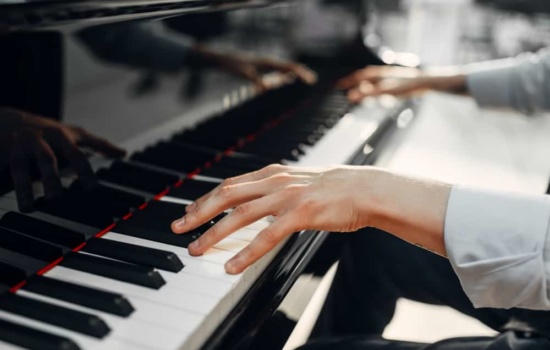
On the other hand, the piano is also a challenging instrument to learn, primarily due to its complex coordination of both hands independently, reading two clefs simultaneously, and managing a broad range of keys. However, unlike the violin, pianists don’t need to worry about intonation, as each key produces a fixed pitch, making it easier for beginners to produce harmonious sounds.

The piano provides immediate feedback and allows players to explore various musical concepts, making it a more forgiving instrument for those in the early stages of learning. While the piano presents its own set of challenges, the violin’s unique combination of intonation, intricate technique, and sensitivity to touch often leads to its reputation as the much more difficult instrument to master for many aspiring musicians.

Triangle

The triangle is perhaps the simplest musical instrument in existence, and that’s precisely what makes it one of the easiest to learn. It requires no fingerings, embouchure, or intricate techniques. To play the triangle, you simply strike it with a metal beater, creating a clear and resonant sound. This simplicity means that even absolute beginners can produce pleasing tones within minutes of picking it up.

The triangle is often used in orchestras and ensembles, allowing beginners to experience the joy of making music with others.

While the triangle may not have the depth of some other instruments in terms of musical complexity, and few take it seriously, it certainly adds a delightful element to various genres of music…though it’s not used as frequently as it once was.

Its fun and easy nature make it an excellent choice for introducing young children to the world of music, fostering an early appreciation for rhythm and melody. As a percussion instrument, it also helps develop a sense of timing and coordination.

Voice/Singing

Learning to sing or use your voice as a musical instrument is one of the easiest and most natural ways to make music. After all, you carry your voice with you everywhere you go and use it all the time.

Singing doesn’t require the physical coordination of playing an instrument or reading sheet music, which can be barriers for some beginners. Most people already have some basic vocal skills, such as speaking and humming, making singing a readily accessible choice. Whether you’re singing in the shower, in a choir, or performing on stage, using your voice to create music can be an immensely rewarding experience.

Singing is inherently fun and expressive. While not everyone understands hitting certain notes, singing comes naturally to many people. It allows you to convey emotions, tell stories, and connect with an audience on a deep level.

It’s also an excellent way to improve your musical ear, as you develop the ability to match pitches and harmonize with other singers or instruments. While formal vocal training can help refine your technique, anyone can enjoy the pleasures of singing, making it one of the most accessible and enjoyable musical pursuits for newcomers.

Xylophone

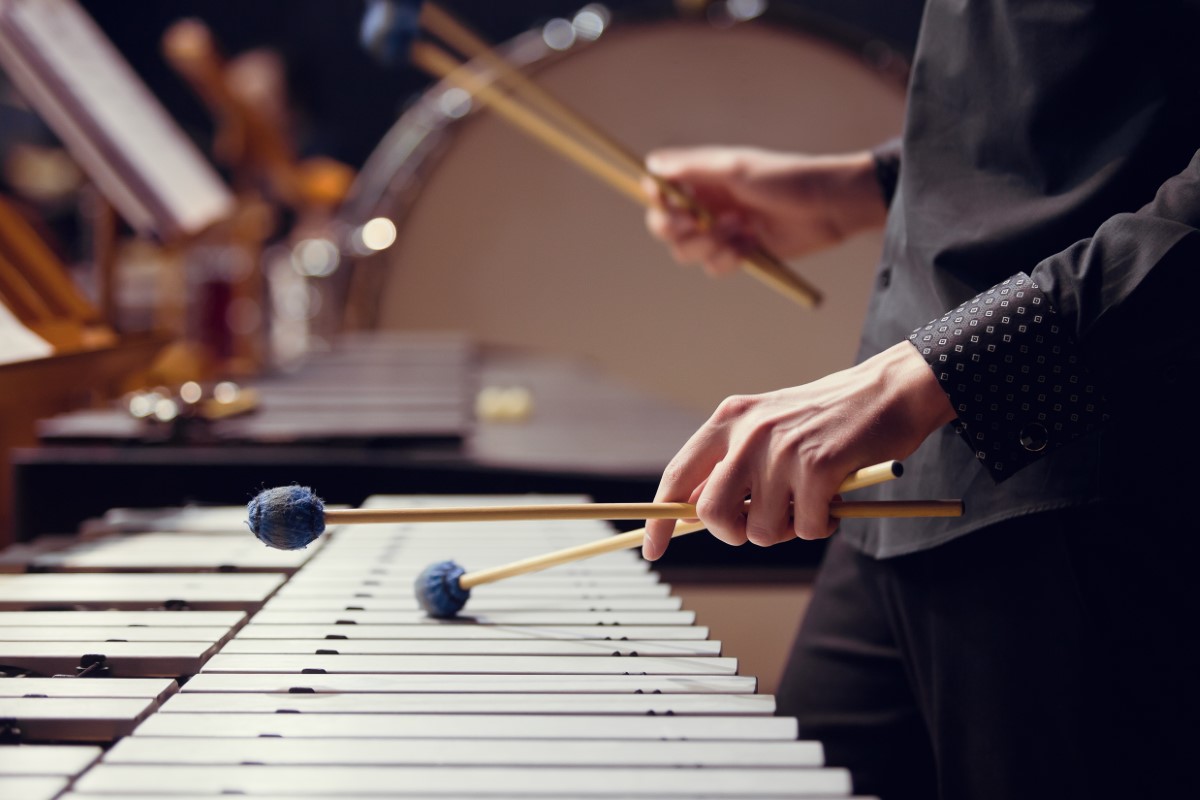
The xylophone is a percussion instrument that offers a great entry point for beginners interested in exploring melodic percussion. It consists of a series of wooden or metal bars arranged in a row, with each bar producing a distinct pitch when struck with mallets.

The simplicity of the xylophone’s design and its clear, organized layout of notes make it easier for beginners to understand musical concepts such as melody, pitch, and rhythm. Learning to play simple tunes on the xylophone can be a gratifying experience, and beginners can progress to more complex pieces as their skills develop.

The xylophone’s physical layout encourages a hands-on approach to music, making it a visually appealing instrument for learners. While it may require some practice to master, the xylophone offers beginners a pleasing journey into the world of percussion and melody.

What is harder, piano or guitar?

Hugh McIntyre

Between the piano and the guitar, the piano is often considered more challenging to learn due to its demanding requirements in terms of hand coordination, reading two clefs at the same time, and mastering a wide range of keys, as well as the need to develop a strong understanding of music theory. The guitar, while also complex, provides more immediate access to basic chord progressions and melodies, making it more approachable for beginners.

Site Search
We use cookies to understand how you use our site and to improve your experience. This includes personalizing content and advertising. By continuing to use our site, you accept our use of cookies, revised Privacy Policy and Terms of Use.