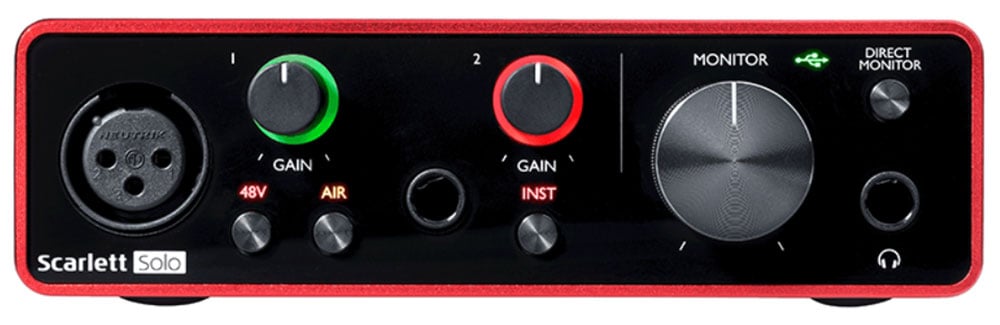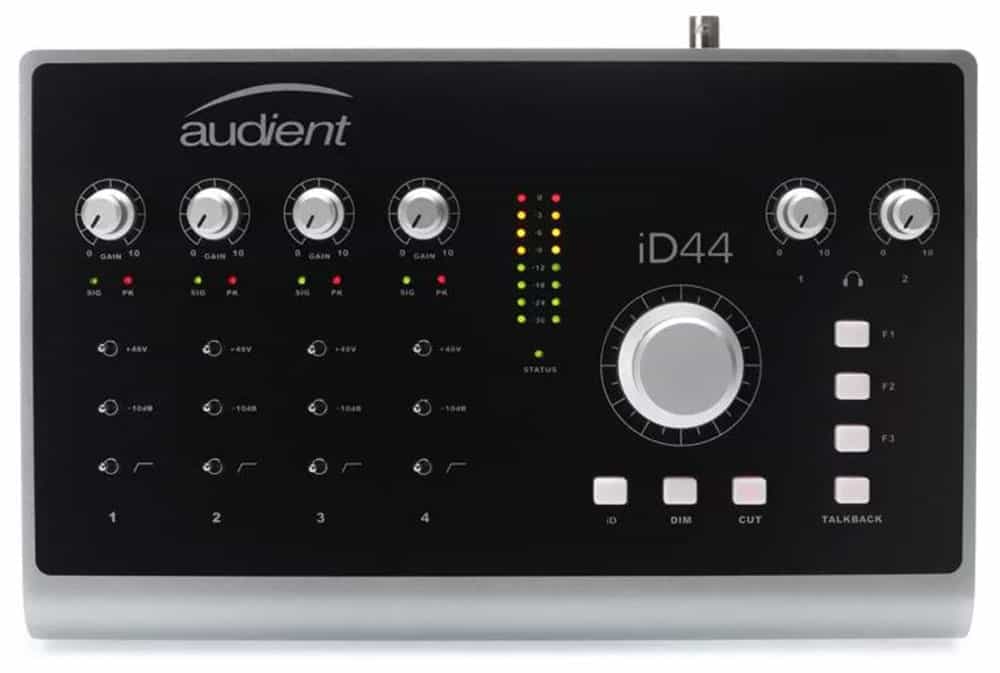











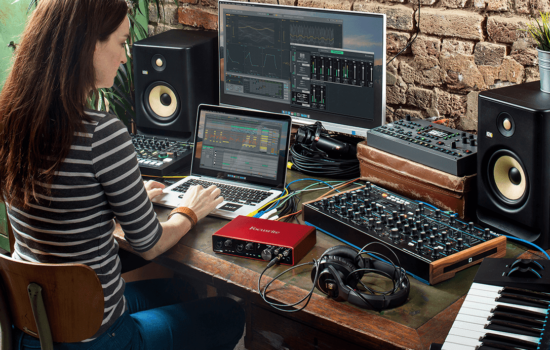
The first thing an audio interface brings to your setup is the proper connections needed for music making. A typical audio interface will have two or more microphone inputs with XLR connectors and phantom power for condenser microphones. They usually have high impedance (Hi-Z) inputs for guitars and similar electric instruments on proper 1/4″ jacks.
Then there can be a number of line level inputs for recording synthesizers, mixer outputs and the sound of other hardware you have in your studio. Your inbuilt microphone has just been replaced with a multi-channel recording interface with professional connectors. Plug yourself in, plug your band in — in fact with the right hardware you could plug in an entire live orchestra.
An audio interface can also give you outputs. You can route these outputs through external hardware and sound processors. If you prefer mixing outside the box, then it can take tracks from the computer individually through an external mixer. You’ll also find a headphone output, usually with its own level control. Often there’ll be two, one for you and one for your singer.
The number of inputs and outputs can range from a single input (great for portability) through to over 100 channels of digital connection but somewhere from 2 to 16 in/out is commonplace.