






Music Career Finder

Start Here:

1. 1. Are you a Musician/Performer or are you just looking for a career in the Music Business? *This question is required.
2. 2. What are you most interested in? Select as many as you like. *This question is required.
Female DJ with turntables and setup
11.28.2023

DJ Equipment for Beginners: What DJ Gear Do You Really Need?

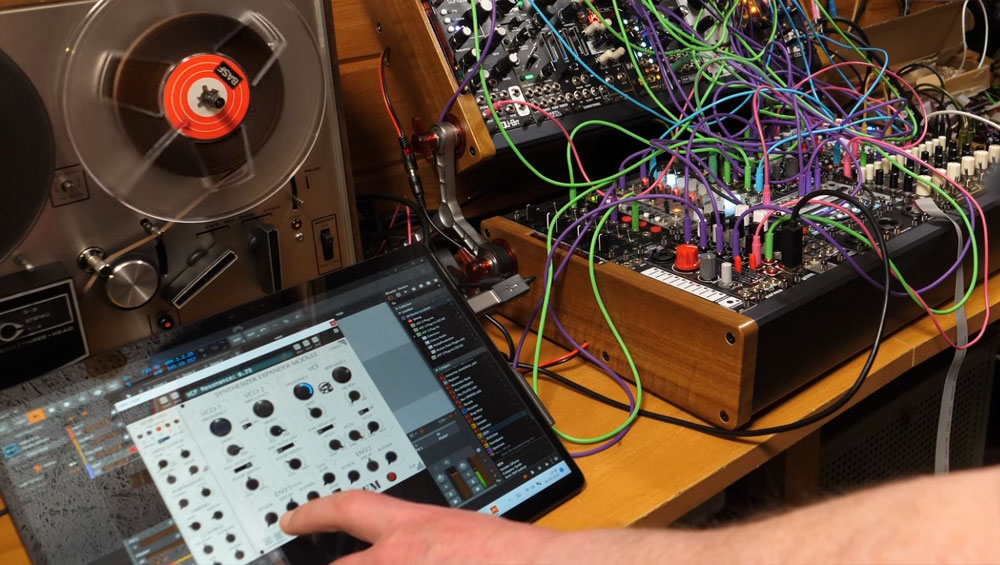
Oberheim OB-X8
11.24.2023

Best Big Synthesizer: The big synths for big sounds

APC64
11.24.2023

The 8 Best non-keyboard MIDI Controllers in 2023

Woman producer using Pro Tools
11.1.2023

DAW Software 2023: Which DAW is Best for Music Production?

Drummer with Alesis Strike Multipad and drums
11.1.2023

The 7 Best Electronic Drum Pads for Your Studio

Overhead shot of drummer playing drum kit
11.1.2023

Best Free Drum VSTs: Meet the Free VSTs That Don’t Suck

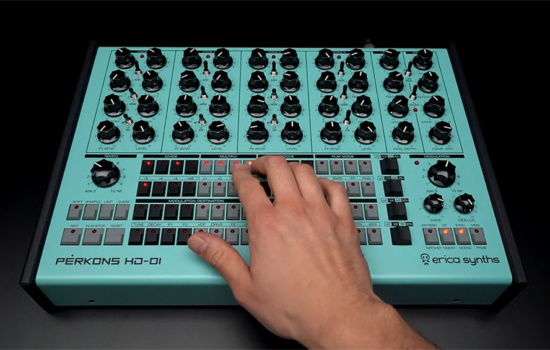
Erica Synths Perkons HD-01
11.1.2023

Best Drum Machines for Making Beats in 2023

Male drummer with drum kit shot from overhead
10.31.2023

Best Drum VST Plugins 2023: Definitive Guide to Drum VSTs

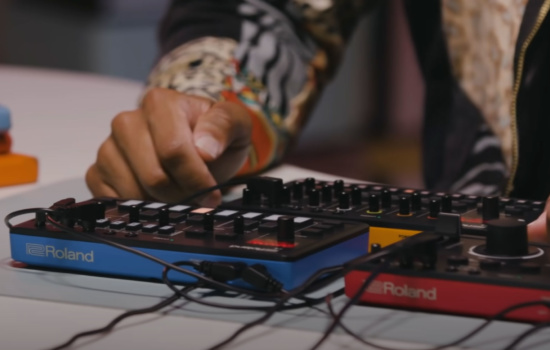
Roland Aira Compact
10.3.2023

Best Synthesizers Under $200

UNO Synth Pro X
10.3.2023

The Best Synthesizers Under $500

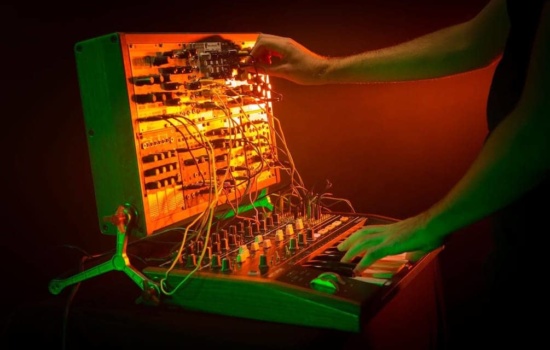
Eurorack setup with musician playing Arturia Rackbrute
10.3.2023

Eurorack: How to Get Started with Modular

Two musicians writing a score with notation software on computer
9.29.2023

Write a Score – 6 Programs To Help Composers & Musicians

make music online
9.27.2023

Make Music Online – 5 Best Online Music Makers

Home keyboard
8.31.2023

The Best Portable Home Keyboard for playing and arranging in 2023

music production laptop
8.18.2023

The Best Music Production Laptop for Home Studios

Female audio engineer listening to headphones in home music studio
8.17.2023

Your Home Music Studio: Setup, Cost, and Essential Equipment

Home recording on a free DAW
8.7.2023

Best Free DAW 2023: For producers on a budget

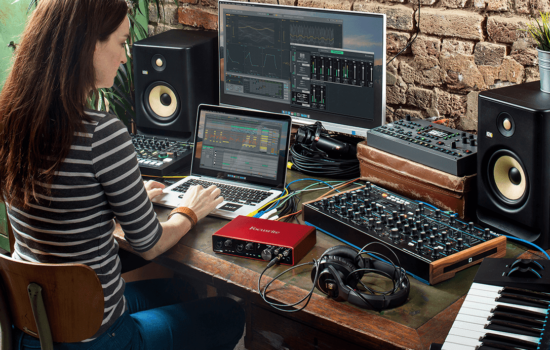
Focusrite studio
8.6.2023

Home Recording Studio Setup for Beginners

Recording Engineer with Beyerdynamic headphones in studio
8.6.2023

Best Studio Headphones 2023 for Pro Studios & Music Production

iRig Stream Mic Pro
8.6.2023

Best USB Microphones of (2023) for vocals and live streaming

What are the best VST Instruments?

Here’s our quick list of the best VST Instruments available in 2023:

  • GForce Software Oberheim SEM
  • Arturia Pigments 3
  • Spectrasonics Omnisphere 2.6
  • Roland Zenology Pro
  • Spectrasonics Keyscape
  • Xfer Records Serum
  • Spitfire Audio BBC Symphony Orchestra
  • Cherry Audio Synth Stack 2

Software virtual instruments continue to evolve beyond our expectations. They have become extraordinary playgrounds of sonic possibility, from the breathtakingly realistic and authentic sound of live instruments to all the squelchiness and control of hardware synthesizers.

But that also sells them short.

VST Instruments are more than emulations of hardware or real-world instruments; they can also be immense landscapes of their own unique forms of sound and tonal exploration.

They can push boundaries of synthesis, harness the power of powerful processors and visualize the parameters and controls in ways not plausible in hardware.

For in-the-box music production, these are the virtual instruments you should have at your disposal.

Note: “VST Instruments”, “VSTi’s” or “virtual software synthesizers” are all terms that describe software sound sources that run on your desktop or laptop computer (usually running MacOS or Windows). They “plug into” music production software and provide the sounds you can play with a keyboard or controller, or sequence, arrange or compose with. These are sometimes referred to as “VST Plugins” but that also includes VST effects and in order to be more specific we’ve done a separate article on the year’s best VST plugins.

Your Questions About VST Instruments Answered

What are the best VST Instruments for beginners?

Robin Vincent

The best place to start is with an instrument you already understand. It could be a synthesizer or style of synth you’re already familiar with, or maybe an instrument that you enjoy the sound of or you know a lot about. There’s a temptation to try out every VSTi you can get your hands on when actually you’ll be more productive if you start with things you know and get the hang of how they work in your DAW before diving into the wider and infinite sonic soundscape of software instruments.

Do you need VST Instruments?

Robin Vincent

Your computer has the power to be an extraordinary instrument and source of sounds. They can be as real and authentic as you want them to be and they enable us to explore sounds we would never be able to encounter in the real world. They’ve become an integral part of the working studio environment.

What VST Instruments do professionals use?

Robin Vincent

Professionals use whatever works in their situation at the time. There’s no doubt that you will find some of the best VSTi’s in studios such as Spectrasonics Omnisphere and Xfer Records Serum but everyone has their favourites and you shouldn’t restrict yourself to what everyone else is using.


Best VST Instruments 2023

Read on for our picks for the year’s best VST instruments.

Hey, what do you think about trying our new Music Career HelperMusic Career Helper really quick? It’s totally free and could help get your career moving fast! Give it a try. It’s totally free and you have nothing to lose.

GForce Software Oberheim SEM

This choice is very self-indulgent because I love the Roland Juno-106 synthesizer and this emulation by Cherry Audio is simply superb and highlights exactly what makes the Juno-106 a great synthesizer.

The DCO-106 recreates the sound of a genuine classic. It mirrors the excitement of playing The SEM or Synthesizer Expander Module from Oberheim is a legendary piece of analog synthesizer history. It’s a remarkably straight forward monophonic synthesizer voice from the 1970s that simply sounds fantastic. There’s something in those oscillators and design of the filter that’s inspired synthesizer designers ever since. Gforce Software has created the only emulation of the SEM endorsed by Tom Oberheim himself for the authenticity of the sound. This is a beautiful synthesizer emulation.

Playing with the SEM is like coming home to the origins of making electronic sounds. With a few pulls on the mouse, you can enter devastatingly awesome analog territory. The interface is all there in the familiar off-white colour and knob stylings. And it’s expanded to bring in the new ideas Tom has developed over the years and to offer a deeper level of modulation and MIDI control.

It’s the sound that ultimately makes it special, and there are over 400 specially crafted presets that will absolutely blow your head off. Those two oscillators vying for attention and juicy detuning, that third oscillator bringing in deeper levels of tone or audio rate modulations to take it to new levels. And that filter – it’s soooo good.

Sprinkle in a little sequencer, arpeggiator, a playful delay and a deep lush reverb and you’ve got quite an instrument on your hands. For vintage, retro or future-retro sounds SEM has what you need. There’s also a bigger version, 8 times bigger called the Oberheim OB-E 8-voice. It strings together 8 SEMs into a single phenomenal instrument.

Street Price: $49
GForceSoftware.com

Arturia Pigments 3

They call it a “polychrome software synthesizer” and it combines wavetable, virtual analog, granular, harmonic and sampling in one engaging and organically flowing machine. Pigments is emotional — it’s all about movement and engaging all of our senses in the exploration of sound and synthesis.

Right from the start Pigments oozes life and visual excitement. It wears its modulation front and center with graphical representations of every wave, every curve, and every possibility. You can almost program this synth visually and know exactly what it’s going to sound like.

Getting into the details: you have 2 synth engines and a utility engine that can handle any of the available types of synthesis and then combine and modulate through each other. With the sampling side, you can load up to 6 slots of samples and play them like a sampler or route them through a granular engine to pull out the grains and generate new soundscapes.

There are multiple filter types including SEM, Jupiter-8 and Buchla low pass gates to sculpt your sound and then you can create the most amazing amount of movement through the many-faceted modulation engine.

You can trigger automation from the keyboard, wrap it in envelopes, move it with LFOs, create mathematical functions, randomize and combine modulators to form new modulators. This is crazy town. And once things are moving you can work it all through the step sequencer with lanes of further automation and explorable randomization.

Pigments has an awesome architecture and workflow that’s easy to use and fun to stumble through.

Street Price: $199
arturia.com

Spectrasonics Omnisphere 2.6

Omnisphere is a hugely expansive synthesizer. Originally designed for pads, it has evolved to become a versatile playground of sound, landscapes, and rhythms that can reflect hardware but also take you off to planets you’ve never explored before. The secret of its huge and powerful sound comes from the layering of mixing of sounds within the engine. Each patch can have 4 layers of sound made from over 500 DSP waveforms, filtered by 34 types, modulated by 8 LFOs and 12 envelopes.

You can import your own audio and then have it pulled apart into individual grains and modulated to within an inch of its life. There’s a massive bank of 57 effects units to process and push your sounds into new zones. All of which can be modulated from the same synthesis engine. There are over 14,000 presets to play with. It has an “Orb” performance interface where you can set things in motion and spin it into sound morphing and discovery.

Omnisphere also has a unique relationship with hardware synthesizers. A growing list of over 30 hardware synths now supports a level of integration where Omnisphere becomes the synth engine of the hardware.

Taking every hardware control and mapping it to parameters inside that pull our hardware-specific elements of Omnisphere, it brings that familiar layout of your favorite synth into the inner workings of Omnisphere.

Omnisphere is an extraordinarily powerful synthesizer.

Street Price: $479
spectrasonics.net

Roland Zenology Pro

Roland are famous for their synthesizers and groove boxes with a whole legacy of classic instruments behind them. Recently they’ve developed a new synthesis technology they call ZEN-Core and it forms the sound engine of their most recent synthesizers such as the Jupiter-X, Jupiter-Xm and Fantom. That same synthesis engine is available as a virtual instrument called Zenology Pro and it opens up a huge range of sounds to the computer musician.

While all sorts of new and exciting sounds are available through Zenology Pro Roland has also been adding emulations of all their most famous and coveted synthesizers as expansion packs. At the time of writing you can get a Juno-106. Jupiter-8, JD-800 and SH-101 just to mention a few. All of Roland’s back catalogue will ultimately end up in here giving you a vast palette of both old and new sounds to explore.

Access to Zenology Pro comes via a subscription to RolandCloud.com where you can pick a level of price and what benefits that gives you. For Zenology Pro you’ll need a “Pro” level subscription of $99 a year. That includes a lot of expansions. But to get them all you’ll ned the $199 Ultimate subscription. Or you can pay the same for a lifetime key for each of the emulated synths which quickly adds up to a lot of money. For what you get the subscription is actually really good value for money.

Street Price: from $29 a year
RolandCloud.com

Spectrasonics Keyscape

An extraordinary collection of keyboards, organs, and electric pianos put together over the course of 10 years, these are deeply multisampled and then reconstructed to produce the most authentic sound possible.

The instruments within Keyscape are compelling and highly expressive to play. You have control over the mix of microphones, character and effects and the ability to combine a couple together to forge completely new tonal ideas. So you can start with an authentic replication of a classic instrument and then start to develop it, push it and sculpt new sounds from the organic to the unreal and find yourself somewhere unexpected.

There are custom controls in every patch dealing with timbre and effects that help showcase the range of these remarkable keyboards.

There are 36 classic instruments in here that would appeal to any keyboard player. These cover Grand Pianos, uprights, classic Rhodes and Wurlitzer electrics, Pianets, Clavinets, and Harpsichord. You’ll find Toy Pianos, Harmochords, Basset and even a couple of digital favorites. And if you don’t find what you need with one keyboard you can duet it up with another to generate a hybrid machine.

You can lose yourself in Keyscape simply for the joy of playing these amazing instruments.

Street Price: $399
spectrasonics.net

Xfer Records Serum

Regarded as one of the most vital virtual instruments for EDM and contemporary pop music, Serum is a complex wavetable synthesizer that enables you to explore intense sounds through a playful user interface. Although it has been around a while now it can’t be beaten on how effortlessly it offers up killer sound after killer sound.

Serum comes with 450 presets and 144 wavetables and so at a basic level, you’re not going to run out of ideas very quickly. Although you can design and import your own wavetables, Serum gives you loads of ways to mess about with what’s already there. You can frequency modulate, amplitude modulate and ring modulate. You can dial in some oscillator sync and lean heavily on the Warp to push the waveform in all sorts of directions.

Modulation works by dragging and dropping connections between modulation sources and the knob you want to modulate. It’s instantly satisfying, controllable and editable in the waveform display. There’s a wide range of filter types from regular low pass to comb, phasers and flangers and all of it ripe for modulation. An effects rack of 10 effect modules makes Serum sound huge and you can play polyphonically or stack the voices up into huge unison modes for unbelievably fat sounds.

Serum sounds fantastic for the beginner and the seasoned professional. It’s instantly awesome and has bags of depth for those who want to dive deeper.

Street Price: $189
xferrecords.com

Spitfire Audio BBC Symphony Orchestra

Spitfire Audio crafts extraordinary sample library instruments. One of their most recent is the sublime and world-famous BBC Symphony Orchestra which captures 99 players, 55 instruments, 418 techniques, and 20 signals. This is an orchestra recorded on their home turf where they are most creative with some of the greatest players in their 90-year history. It’s the sort of sound that will define a generation of computer-based Composers.

The BBC Symphony Orchestra comprises of over 200 hours of recording, over 1,000,000 samples and takes up 568GB of space. You can buy it on a 1TB SSD drive ready to go if you wish. The idea was to capture a truly cohesive sound with an orchestra that plays together and feels together.

The Spitfire Audio instrument interface is breathtakingly simple with essentially two sliders and one dial to bring in the dynamics, the space and the excitement of these instruments. There’s a lot more going on behind the scenes but it’s refreshingly uncomplicated and lets you focus on being creative rather than engineering. Although you can do that, too, by mixing and balancing the signals from 20 sources, including 11 microphone positions.

The BBC Symphony Orchestra is a truly epic orchestral instrument that’s the new standard for computer-based composition.

Street Price: $999
spitfireaudio.com

Cherry Audio Synth Stack 2

Cherry Audio has pulled together a bundle of their analogue synthesizer emulations which stands as a superb collection of instruments for modern music production. You get 10 synthesizers in total which covers both the obvious everyday synths and the more unusual, thoughtful and remarkable machines of sound generation.

In Synth Stack 2 you’ll find DCO-106 (Roland Juno 106), CA2600 (ARP 2600), Surrealistic MG-1 Plus (Realistic Moog MG-1), Polymode (Moog Polymoog), Eight Voice (Oberheim 8-Voice almost as good as the Gforce Software one), PS-20 (Korg MS-20), Memorymode (MemoryMoog), Mercury-4 (Roland Jupiter-4) and Quadra (ARP Quadra). In addition you get Cherry Audio’s virtual modular environment called Voltage Modular with 120 modules.

With these intruments in your DAW you’d never need to go in search of analog sounds again. The DCO-106 is one of the most playable Juno emulations I’ve ever heard. The 2600 is superb and totally absorbing. The PS-20 has that Korg spit down to a tea and the Memorymode is to die for. It’s a great bunch of synths from a developer that’s at the top of their game.

Street Price: $249
CherryAudio.com

Conclusion

What is the best VST Instrument? With the incredible range of VSTi’s out there, it’s silly to pick just one. With our eight picks for 2023‘s most incredible VST Instruments, you’re sure to find something phenomenal that works with your budget and pushes your chosen genre forward.

Editor’s Note:
If you’re interested haunting female solo vocal libraries, we’re also a fan of Soundiron’s brilliant Voices of Wind Collection. Be sure to give it a listen.

Make sure to check out our comprehensive guides on the Best Synth VST and Best Free Synth VST!

With so many possibilities, which VST Instrument will you try first?

Site Search
We use cookies to understand how you use our site and to improve your experience. This includes personalizing content and advertising. By continuing to use our site, you accept our use of cookies, revised Privacy Policy and Terms of Use.